77.6 F
Ocala
Thursday, April 2, 2026
More
    Home Blog Page 155

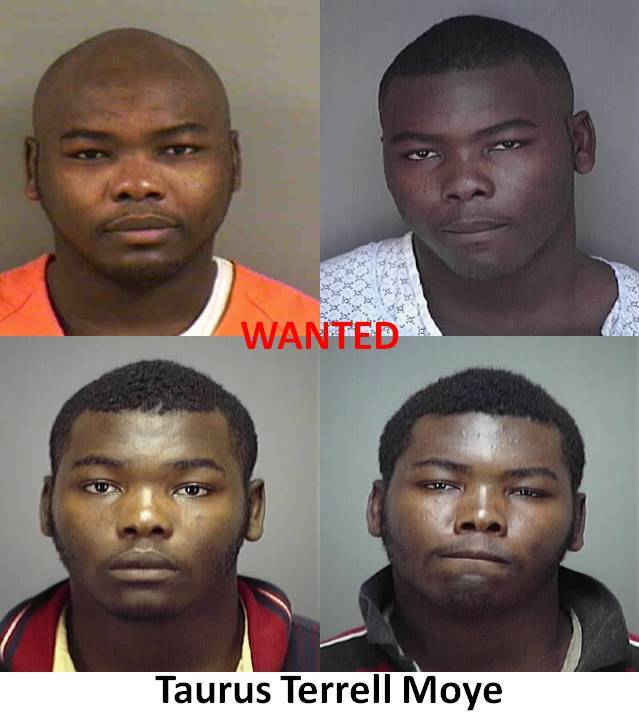
    Taurus Terrell Moye Wanted;Considered Armed And Extremely Dangerous

    0


    Taurus Terrell Moye, ocala post, ocala news, op

    Polk County, Florida — Polk County Sheriff’s detectives say they now have a suspect in the October 11, 2013 murder of Davonte Lewis.

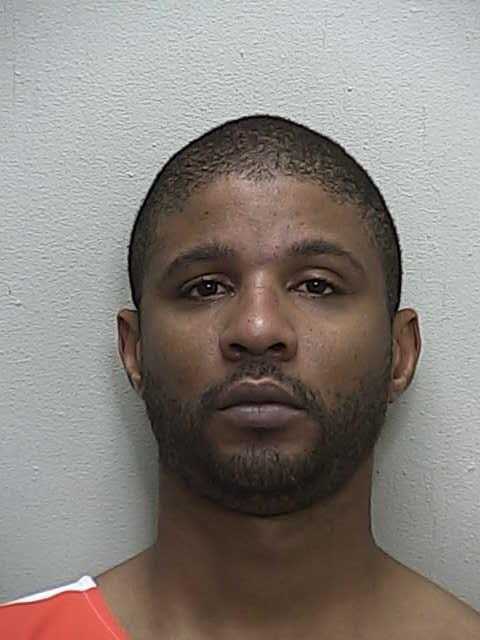
    A warrant for Taurus Terrell Moye, 35, has been issued for Possession of a Weapon by a Convicted Felon and he is wanted for questioning in a Homicide.

    Moye is described as a black male, 6′ tall weighing approximately 218 pounds. Moye also has several tattoos; On his back “Stromb” and “It was Written”; on his left arm: “Krazy,” “TM,” and “WPG”; on his right arm: bars, “Cry No More” and “He Has Gold Teeth.” His last known address is 5634 Cherry Wood Circle in Lakeland, Florida. He may also use the name Terrell.

    Moye has an extensive criminal record and multiple felony convictions beginning at the age of 18. He was just released from prison in May of 2013 after serving a 10 year sentence for Attempted Second Degree Murder and Aggravated Battery With A Deadly Weapon. His list of charges include Distribution of Cocaine, Armed Robbery, Fleeing and Eluding Police, Aggravated Battery, and Attempted Murder.

    Authorities say that Moye is as dangerous as they come, and he does not have any respect for human life or law enforcement. He is wanted and considered armed and extremely dangerous. If you see him, do not approach him. Immediately call 911.

    Moye may have ties to other cities in Central Florida.

    There is a $3,000 reward for tips that lead to his capture.

    Take a good look at his photos; If anyone has information about Moye’s whereabouts they are urged to contact Detective Jason McPherson at 863-298-6200.

    Spread the word; Like and Share below.

    Gassy situation gets Ocala couple arrested

    1


    ocala post, ocala news, op, marion county

    Ocala, Florida — On January 13, 2014, Deputy Jacobs responded to the Murphy U.S.A. gas station, located at 17840 SE 112 Court Road in reference to a gas drive off.

    The store clerk told the deputy that a vehicle with one male and one female pulled up to get gas. The clerk said that the female got out and pumped gas while the man waited in the driver’s seat.

    According to reports, the clerk was able to give a detailed description of both suspects and noted the tag number of the vehicle. The license plate on the vehicle was registered to an Orlando rental car company. Security footage from the store was obtained and both suspects were identified.

    On January 15, 2014, both suspects were tracked down using surveillance footage and information from the rental car company.

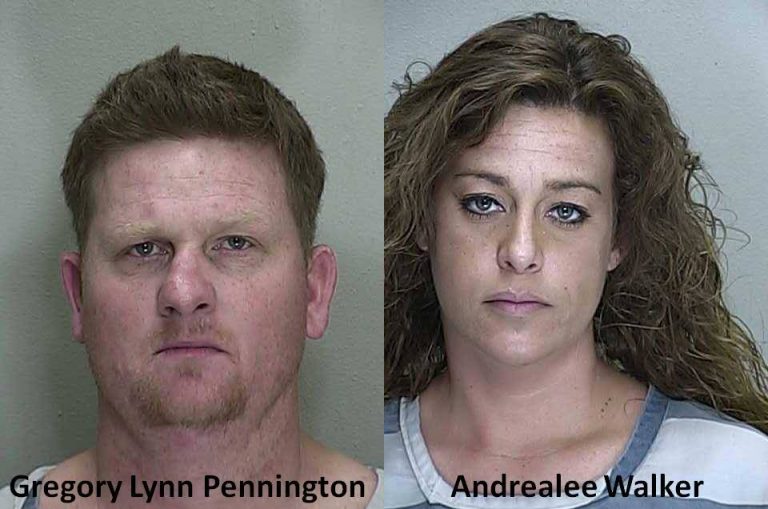
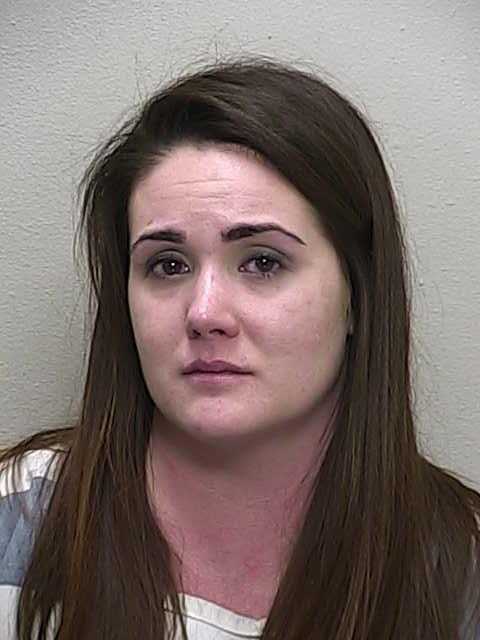
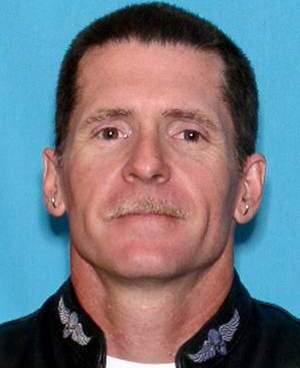
    Gregory Lynn Pennington, 38, and Andrealee Walker, 32, were arrested at their home.

    Records show that Pennington was released from Jail exactly one year ago today for battery. He has been arrested nine other times between 2006 and 2013 on charges of Felony Credit Card Fraud, Felony Larceny of $100,000 or more, Armed Burglary, multiple Felony Violation of Probation violations, and Dealing in Stolen Property.

    Walker has been arrested four other times on charges of Distribution of Heroin, Manufacturing of Methamphetamine, Burglary, Grand Theft, Dealing in Stolen Property, DUI, and has also violated probation multiple times.

    Both Walker and Pennington are currently booked into the Marion County Jail.

    The total amount of gas stolen was $25.18.

    Mexico Travel Warning As Of January 2014

    0


    Mexico Travel Warning

    The U.S. Department of State warns U.S. citizens about the risk of traveling in Mexico due to threats to safety and security posed by Transnational Criminal Organizations (TCOs) in the country. U.S. citizens have been the target of violent crimes, such as kidnapping, carjacking, and robbery by TCOs in various Mexican states. For information on security conditions in specific regions of Mexico, which can vary, travelers should reference the state-by-state assessments further below.

    This Travel Warning replaces the Travel Warning for Mexico, issued July 12, 2013, to update information about the security situation and to advise the public of additional restrictions on the travel of U.S. government (USG) personnel.

    General Conditions:

    Millions of U.S. citizens safely visit Mexico each year for study, tourism, and business, including more than 150,000 who cross the border every day. The Mexican government dedicates substantial resources to protect visitors to major tourist destinations, and there is no evidence that Transnational Criminal Organizations (TCOs) have targeted U.S. visitors or residents based on their nationality. Resort areas and tourist destinations in Mexico generally do not see the levels of drug-related violence and crime that are reported in the border region or in areas along major trafficking routes.

    Nevertheless, U.S. travelers should be aware that the Mexican government has been engaged in an extensive effort to counter TCOs which engage in narcotics trafficking and other unlawful activities throughout Mexico. The TCOs themselves are engaged in a violent struggle to control drug trafficking routes and other criminal activity. Crime and violence are serious problems and can occur anywhere. U.S. citizens have fallen victim to criminal activity, including homicide, gun battles, kidnapping, carjacking and highway robbery. While most of those killed in narcotics-related violence have been members of TCOs, innocent persons have also been killed. The number of U.S. citizens reported to the Department of State as murdered in Mexico was 71 in 2012 and 81 in 2013.

    Gun battles between rival TCOs or with Mexican authorities have taken place in towns and cities in many parts of Mexico, especially in the border region. Gun battles have occurred in broad daylight on streets and in other public venues, such as restaurants and clubs. During some of these incidents, U.S. citizens have been trapped and temporarily prevented from leaving the area. TCOs have used stolen cars, buses and trucks to create roadblocks on major thoroughfares, preventing the military and police from responding to criminal activity. The location and timing of future armed engagements is unpredictable. We recommend that you defer travel to the areas indicated in this Travel Warning and exercise extreme caution when traveling throughout the northern border region.

    The number of kidnappings throughout Mexico is of particular concern and appears to be on the rise. According to statistics published by the Mexican Secretaria de Gobernacion (SEGOB), during the first 11 months of 2013 kidnappings nationwide increased 32 percent over the same period in 2012. While kidnappings can occur anywhere, according to SEGOB during this timeframe, the states with the highest numbers of kidnappings were Guerrero, Tamaulipas, Michoacán, Estado de Mexico, and Morelos. Additionally, according to a widely publicized study by the agency responsible for national statistics (INEGI, the National Institute of Statistics and Geography), Mexico suffered an estimated 105,682 kidnappings in 2012; only 1,317 were reported to the police. Police have been implicated in some of these incidents. Both local and expatriate communities have been victimized. Almost 90 kidnappings of U.S. citizens were reported to the U.S. Embassy and consulates in Mexico between April and November of 2013.

    U.S. citizens are encouraged to lower their personal profiles and to avoid wearing conspicuous jewelry or clothing bearing logos of U.S. sports teams or military themed apparel which that may identify them as U.S. citizens. U.S. citizens are encouraged to maintain awareness of their surroundings and avoid situations in which they may be isolated.

    Kidnappings in Mexico have included traditional, “express” and “virtual” kidnappings. Victims of traditional kidnappings are physically abducted and held captive until a ransom is paid for release. “Express” kidnappings are those in which a victim is abducted for a short time and forced to withdraw money, usually from an ATM, then released. A “virtual” kidnapping is an extortion by deception scheme wherein a victim is contacted by phone and convinced to isolate themselves from family and friends until a ransom is paid. The victim is coerced (by threat of violence) to remain isolated and to provide phone numbers for the victim’s family or loved ones. The victim’s family is then contacted and a ransom for the “kidnapped” extracted. Recently, some travelers to Mexico staying at hotels as guests have been targets of such “virtual” kidnapping schemes.

    Carjacking and highway robbery are serious problems in many parts of the border region, and U.S. citizens have been murdered in such incidents. Most victims who complied with carjackers’ demands have reported that they were not physically harmed. Carjackers have shot at vehicles that have attempted to flee. Incidents have occurred during the day and at night, and carjackers have used a variety of techniques, including roadblocks, bumping/moving vehicles to force them to stop, and running vehicles off the road at high speeds. There are indications that criminals target newer and larger vehicles, especially dark-colored SUVs. However, even drivers of old sedans and buses coming from the United States have been targeted. While violent incidents can occur anywhere and at any time, they most frequently occur at night and on isolated roads. To reduce risk when traveling by road, we strongly urge you to travel between cities throughout Mexico only during daylight hours, to avoid isolated roads, and to use toll roads (“cuotas”) whenever possible.

    The Mexican government has deployed federal police and military personnel throughout the country as part of its efforts to combat the TCOs. U.S. citizens traveling on Mexican roads and highways by car or bus may encounter government checkpoints, staffed by military or law enforcement personnel. TCOs have erected their own unauthorized checkpoints, at times wearing police and military uniforms, and killed or abducted motorists who have failed to stop at them. You should cooperate at all checkpoints.

    The Department imposes restrictions on U.S. government employees’ travel in Mexico. Since July 2010, USG employees are prohibited from driving on non-official travel from the U.S.-Mexico border to or from the interior of Mexico or Central America. One exception is that personal travel by motor vehicle is permitted on Highway 15 toll road between Hermosillo and Nogales during daylight hours.

    USG personnel and their families are prohibited from personal travel to all areas to which it is advised to “defer non-essential travel”. When travel for official purposes is essential, it is conducted with extensive security precautions. USG personnel and their families are allowed to travel for personal reasons to the areas where no advisory is in effect or where the advisory is to exercise caution. While the general public is not forbidden from visiting places categorized under “defer non-essential travel,” USG personnel will not be able to respond quickly to an emergency situation in those areas due to security precautions that must be taken by USG personnel to travel to those areas.

    For more information on road safety and crime along Mexico’s roadways, see the Department of State’s Country Specific Information.

    State-by-State Assessment:

    Below is a state-by-state assessment of security conditions throughout Mexico. Travelers should be mindful that even if no advisories are in effect for a given state, crime and violence can occur anywhere. For general information about travel and other conditions in Mexico, see our Country Specific Information.

    Aguascalientes: You should exercise caution when traveling to the areas of the state that border the state of Zacatecas, as TCO activity in that region continues. There is no advisory in effect for daytime travel to the areas of the state that do not border Zacatecas; however, intercity travel at night is not recommended.

    Baja California: Tijuana, Ensenada and Mexicali are major cities/travel destinations in the state of Baja California – Exercise caution in the northern state of Baja California, particularly at night. There were 458 homicides in Tijuana from October 2012 through September 2013, compared with 324 for the same period a year earlier. Murders in Mexicali declined in the same period from 166 to 132. In the majority of these cases, the killings appeared to be targeted TCO assassinations. Turf battles between criminal groups resulted in assassinations in areas of Tijuana and Mexicali frequented by U.S. citizens. Shooting incidents, in which innocent bystanders have been injured, have occurred during daylight hours.

    Baja California (Sur): Cabo San Lucas and La Paz are major cities/travel destinations in the state of Southern Baja California – No advisory is in effect.

    Campeche: No advisory is in effect.

    Chiapas: San Cristobal de las Casas is a major city/travel destination in Chiapas – No advisory is in effect.

    Chihuahua: Ciudad Juarez, Chihuahua City, and Copper Canyon are major cities/travel destinations in Chihuahua – Exercise caution in traveling to the business and shopping districts in the northeast section of Ciudad Juarez and its major industrial parks, and the central downtown section and major industrial parks in Chihuahua City. U.S. citizens should defer non-essential travel to other areas of these cities and anywhere else in the state of Chihuahua and travel during daylight hours between cities. In Ciudad Juarez, personal travel by USG employees outside the north/central and northeast portion of the city near the Consulate General is restricted and private U.S. citizens should defer non-essential travel to those areas as well. In Chihuahua City, USG personnel and their family members are permitted to travel only to the central business districts and the city’s airport. Personal vehicular travel during daylight hours by USG personnel and family members is authorized between Ciudad Juarez and Chihuahua using the Highway 45 toll road. Although homicide rates in Ciudad Juarez have decreased markedly from a peak several years ago, the city still has one of the highest homicide rates in Mexico. Crime and violence remain serious problems throughout the state of Chihuahua, particularly in the southern portion of the state and in the Sierra Mountains, including Copper Canyon. U.S. citizens do not, however, appear to be targeted based on their nationality.

    Coahuila: Defer non-essential travel to the state of Coahuila. The State of Coahuila continues to experience high rates of violent crimes and narcotics-related murders. TCOs continue to compete for territory and coveted border crossings to the United States. Violent crime, including murder, kidnapping, and armed carjacking, continues to be a major concern in the cities of Torreón, Saltillo, Piedras Negras, Ciudad Acuña, and Monclova. Of particular safety concern are casinos, sports books, or other gambling establishments and adult entertainment establishments, which USG personnel are not permitted to patronize.

    Colima: Manzanillo is a major city/travel destination in Colima -Defer non-essential travel to the areas of the state of Colima that border the state of Michoacán, including the city of Tecoman. Exercise caution when travelling to other parts of the state, including Colima City and Manzanillo. The security situation along the Michoacán border continues to be the most unstable in the state with gun battles occurring between rival criminal groups and with Mexican authorities. Homicides throughout the state totaled 179 in 2012 and 147 for the first ten months of 2013, according to figures from the Colima state government.

    Durango: Defer non-essential travel to the state of Durango, except the city of Durango where you should exercise caution. TCO violence and criminal activity along the highway are continuing security concerns. Several areas in the state continue to experience high rates of violence and remain volatile and unpredictable. The Mexican government deployed troops in March 2013 to quell TCO violence in the La Laguna area, which is comprised of the cities of Gomez Palacio and Lerdo in the state of Durango and the city of Torreon in the state of Coahuila. Of particular safety concern are casinos, sportsbooks, or other gambling establishments and adult entertainment establishments, which USG personnel are not permitted to patronize. USG personnel may not travel outside the city of Durango and must abide by a curfew of 1 a.m. to 6 a.m. within a secured venue.

    Estado de Mexico: Toluca and Teotihuacan are major travel destinations in Estado de Mexico – Defer non-essential travel to the municipalities of Coacalco, Ecatepec, Nezahualcoyotl, La Paz, Valle del Chalco, Solidaridad, Chalco, and Ixtapaluca, which are eastern portions of the greater Mexico City metropolitan area, located just to the east of the Federal District of Mexico and Benito Juarez airport, unless traveling directly through the areas on major thoroughfares. These areas have seen high rates of crime and insecurity. You should also defer non-essential travel on any roads between Santa Marta in the southeast portion of the state and Huitzilac in the state of Morelos, including the Lagunas de Zempoala National Park and surrounding areas.

    Guanajuato: San Miguel de Allende and Leon are major cities/travel destinations in Guanajuato – No advisory is in effect.

    Guerrero: Acapulco, Ixtapa, Taxco and Zihuatanejo are major cities/travel destinations in Guerrero – Defer non-essential travel to the northwestern and southern portions of the state (the area west and south of the town of Arcelia on the border with Estado de Mexico in the north and west and south of the town of Tlapa near the border with Oaxaca), except for the cities of Acapulco, Zihuatanejo, and Ixtapa. In those cities, you should exercise caution and stay within tourist areas. You should also exercise caution and travel only during daylight hours on toll highway (“cuota”) 95D between Mexico City and Acapulco. Use the toll road towards the Playa Diamante area and avoid the highway running through the city of Acapulco for travel to and from Acapulco. In Acapulco, defer non-essential travel to areas further than 2 blocks inland of the Costera Miguel Aleman Boulevard, which parallels the popular beach areas. Lodging for USG personnel is limited to the “Hotel Zone” of Acapulco, beginning from the Hotel Avalon Excalibur Acapulco in the north and going south through Puerto Marquez including the Playa Diamante area. Any activity outside the Hotel Zone for USG personnel is limited to the coastal area from La Quebrada to the beginning of the Hotel Zone and only during daylight hours. In general, the popular tourist area of Diamante, just south of the city, has been less affected by violence. Flying into the coastal cities in southern Guerrero remains the preferred method of travel. You should defer non-essential travel by land between Acapulco and Zihuatanejo/Ixtapa, travel to Zihuatanejo/Ixtapa only by air, and exercise caution while in Zihuatanejo/Ixtapa. If traveling by land, use toll highway 200 between Acapulco and Zihuatanejo/Ixtapa. You should also exercise caution in the northern region of Guerrero (the area north of the town of Arcelia on the border with Estado de Mexico in the north and north and east of the town of Tlapa near the border with Oaxaca). The state of Guerrero was the most violent state in Mexico through the first 10 months of 2013, with 1,718 homicides and 205 reported cases of kidnapping, according to the Mexican Secretariado Ejecutivo Nacional de Seguridad Publica. Self-defense groups operate independently of the government in many areas of Guerrero. Armed members of these groups frequently maintain roadblocks, and although not considered hostile to foreigners or tourists, are suspicious of outsiders and should be considered volatile and unpredictable.

    Hidalgo: No advisory is in effect.

    Jalisco: Guadalajara, Puerto Vallarta, and Lake Chapala are major cities/travel destinations in Jalisco – Defer non-essential travel to areas of the state that borders the state of Michoacán and Zacatecas. The security situation along the Michoacán and Zacatecas borders continues to be unstable and gun battles between criminal groups and authorities occur. Concerns include roadblocks placed by individuals posing as police or military personnel and recent gun battles between rival TCOs involving automatic weapons. You should exercise caution in rural areas and when using secondary highways, particularly along the northern border of the state. Except for the areas of the state that border Michoacán, there is no advisory in effect for daytime travel within major population centers or major highways in the state of Jalisco. Intercity travel at night is not recommended. There is no recommendation against travel to Guadalajara and Puerto Vallarta. There is also no recommendation against travel on principal highways in Jalisco between Guadalajara including the portions that cross into the southern portions of the state of Nayarit.

    Mexico City (also known as the Federal District): No advisory is in effect. See also the discussion in the section on Estado de Mexico for areas within the greater Mexico City metropolitan area.

    Michoacán: Morelia is a major city/travel destination in Michoacán – Defer non-essential travel to the state of Michoacán except the cities of Morelia and Lázaro Cardenas where you should exercise caution. Flying into Morelia and Lázaro Cardenas is the recommended method of travel. Attacks on Mexican government officials, law enforcement and military personnel, and other incidents of TCO-related violence, have occurred throughout Michoacán. Due to criminal activity in Lazaro Cardenas, in late 2013 the Mexican military assumed direct control of the port. In many areas of the state, self-defense groups operate independently of the government. Armed members of the groups frequently maintain roadblocks, and although not considered hostile to foreigners or tourists, are suspicious of outsiders and should be considered volatile and unpredictable. Groups in Michoacán are reputed to be linked to TCOs.

    Morelos: Cuernavaca is a major city/travel destination in Morelos – Exercise caution in the state of Morelos due to the unpredictable nature of TCO violence. You should also defer non-essential travel on any roads between Huitzilac in the northwest corner of the state and Santa Marta in the state of Mexico, including the Lagunas de Zempoala National Park and surrounding areas. On August 24, 2012 two USG employees were injured after being fired upon by Federal Police officers on a non-toll road north of Tres Marias, Morelos. Numerous incidents of narcotics-related violence have also occurred in the city of Cuernavaca.

    Nayarit: Defer non-essential travel to areas of the state of Nayarit that border the states of Sinaloa or Durango, as well as all rural areas and secondary highways. Exercise caution when traveling to the cities of Tepic, Xalisco, or San Blas. There is no recommendation against travel to the Vallarta-Nayarit area in the southern portion of the state also known as the Riviera Nayarit or to principal highways in the southern portion of the state used to travel from Guadalajara to Puerto Vallarta.

    Nuevo Leon: Monterrey is a major city/travel destination in Nuevo Leon -Defer non-essential travel to the state of Nuevo Leon, except the metropolitan area of Monterrey where you should exercise caution. Although the level of TCO violence and general insecurity in Monterrey has decreased within the last 12 months, sporadic gun battles continue to occur in the greater Monterrey area. Adult entertainment establishments and casinos continue to be targets of TCO activity. TCOs have kidnapped, and in some cases murdered U.S. citizens, even when ransom demands are met. TCOs have been known to attack prisons and police stations, and have engaged in public shootouts with the military and between themselves. Pedestrians and innocent bystanders have been killed in these incidents. As a result of a Department of State assessment of the overall security situation, the Consulate General in Monterrey is a partially unaccompanied post with no minor dependents of USG personnel permitted. USG personnel serving at the U.S. Consulate General in Monterrey and their dependents may not frequent casinos, sports books, or other gambling establishments. USG personnel and their dependents may not travel outside the San Pedro Garza Garcia municipal boundaries between 1 a.m. and 6 a.m., except for travel to the airport after 5 a.m.

    Oaxaca: Oaxaca, Huatulco and Puerto Escondido are major cities/travel destinations in Oaxaca – No advisory is in effect.

    Puebla: No advisory is in effect.

    Queretaro: No advisory is in effect.

    Quintana Roo: Cancun, Cozumel, Playa del Carmen, Riviera Maya and Tulum are major cities/travel destinations in Quintana Roo – No advisory is in effect.

    San Luis Potosi: Defer non-essential travel to the state of San Luis Potosi, except the city of San Luis Potosi where you should exercise caution. Travel throughout the state remains a concern. TCO violence and criminal activity along highways are continuing security concerns. USG personnel may not frequent casinos, sports books, or other gambling establishments and adult entertainment establishments. USG personnel may not travel outside the City of San Luis Potosi and must abide by a curfew of 1 a.m. to 6 a.m. within a secured venue.

    Sinaloa: Mazatlan is a major city/travel destination in Sinaloa – Defer non-essential travel to the state of Sinaloa except the city of Mazatlan where you should exercise caution, particularly late at night and in the early morning. One of Mexico’s most powerful TCOs is based in the state of Sinaloa, and violent crime rates remain high in many parts of the state. Travel off the toll roads in remote areas of Sinaloa is especially dangerous and should be avoided. We recommend that any travel in Mazatlan be limited to Zona Dorada and the historic town center, as well as direct routes to/from these locations and the airport.

    Sonora: Nogales, Puerto Peñasco, Hermosillo, and San Carlos are major cities/travel destinations in Sonora – Sonora is a key region in the international drug and human trafficking trades, and can be extremely dangerous for travelers. Travelers throughout Sonora are encouraged to limit travel to main roads during daylight hours. The region west of Nogales, east of Sonoyta, and from Caborca north, including the towns of Saric, Tubutama and Altar, and the eastern edge of Sonora bordering Chihuahua, are known centers of illegal activity and non-essential travel between these cities should be avoided. Travelers should also defer non-essential travel to the eastern edge of the State of Sonora which borders the State of Chihuahua (all points along that border east of the northern city of Agua Prieta and the southern town of Alamos), and defer non-essential travel within the city of Ciudad Obregon and south of the city of Navojoa. You should exercise caution while transiting Vicam in southern Sonora due to a roadblock instituted by local indigenous and environmental groups. In December 2013, a gun battle involving Mexican authorities and TCOs occurred in Puerto Penasco. U.S. citizens visiting Puerto Peñasco should remain vigilant, exercise caution and use the Lukeville, Arizona/Sonoyta, Sonora border crossing, in order to limit driving through Mexico.

    Tabasco: Villahermosa is a major city/travel destination in Tabasco – No advisory is in effect.

    Tamaulipas: Matamoros, Nuevo Laredo, Reynosa, and Tampico are major cities/travel destinations in Tamaulipas – Defer non-essential travel to the state of Tamaulipas. All USG employees are prohibited from personal travel on Tamaulipas highways outside of Matamoros, Reynosa, and Nuevo Laredo due to the tenuous security situation. In Matamoros, USG employees are subject to further movement restrictions between midnight and 6 a.m. USG employees may not frequent casinos and adult entertainment establishments. Matamoros, Reynosa, Nuevo Laredo, and Ciudad Victoria have experienced grenade attacks in the past year, as well as numerous reported gun battles. Violent gun battles between rival TCO elements and/or the Mexican military can occur in all parts of the region, and at all times of the day. The kidnapping rate for Tamaulipas, the highest for all states in Mexico, more than doubled in 2012 over 2011, and the number of U.S. citizens reported to the consulate as kidnapped in 2013 increased by 75% over 2012. In February 2013, four masked and armed individuals attempted to kidnap a USG employee in Matamoros during daylight hours. All travelers should be aware of the risks posed by armed robbery and carjacking on state highways throughout Tamaulipas, particularly on highways and roads outside of urban areas along the northern border. Traveling outside of cities after dark is particularly dangerous. While no highway routes through Tamaulipas are considered safe, the highways between Matamoros-Tampico, Monterrey-Nuevo Laredo, and Matamoros-Ciudad Victoria are particularly prone to criminal activity. In the past year there have been several instances of U.S. citizens being kidnapped from hotels while attending family or social events (e.g. weddings and funerals). In at least one incident, a member of the traveling party was summoned to the front desk by hotel staff whereupon he was kidnapped. Travelers should consider selecting hotels with adequate security and reputability as well as exercising caution when responding to phone calls or knocks at the door while resident in a hotel. Travelers should stay low-key and refrain from flashing around cash or wearing expensive jewelry.

    Tlaxcala: No advisory is in effect.

    Veracruz: Exercise caution when traveling in the state of Veracruz. The state of Veracruz continues to experience violence among rival criminal organizations. Mexican federal security forces continue to assist state and local security forces in providing security and combating organized crime.

    Yucatan: Merida and Chichen Itza are major cities/travel destinations in Yucatan – No advisory is in effect.

    Zacatecas: Defer non-essential travel to areas of Zacatecas near the border with other Mexican states. Exercise caution in the interior of the state including the city of Zacatecas. The regions bordering Durango and Coahuila as well as the cities of Fresnillo and Fresnillo-Sombrete and surrounding area are particularly dangerous. Robberies, carjackings, and TCO activity remain a concern. Gun battles between criminal groups and authorities have occurred in the area of the state bordering the state of Jalisco. The city of Fresnillo, the area extending northwest from Fresnillo through Durango and into Chihuahua is considered dangerous. Extreme caution should be taken when traveling in the remainder of the state. Of particular safety concern are casinos, sports books, or other gambling establishments and adult entertainment establishments, which USG personnel may not frequent. USG personnel may not travel outside the City of Zacatecas after dark and must abide by a curfew of 1 a.m. to 6 a.m. within a secured venue.

    Philippines Travel Warning 2014

    0


    philippines travel warning, ocala, ocala post, ocala news, op

    The Department of State warns U.S. citizens of the risks of travel to the Philippines, in particular to the Sulu Archipelago and the island of Mindanao. This warning replaces the 2013 warning.

    U.S. citizens should continue to defer non-essential travel to the Sulu Archipelago, due to the high threat of kidnapping of international travelers and violence linked to insurgency and terrorism there.

    U.S. citizens should continue to exercise extreme caution if traveling to the island of Mindanao in the southern Philippines. In 2013, separatist and terrorist groups increased the tempo and scale of their activities and confrontations with Philippine security forces, with increased bombings, attacks on civilians and political leaders, and battles with security forces. In September 2013, elements of the Moro National Liberation Front (MNLF) occupied portions of the city of Zamboanga and engaged in a lengthy battle with security forces which reduced large parts of the city to rubble. The Bangsamoro Islamic Freedom Front (BIFF) has been particularly active in the Cotabato City area, and in the Maguindanao, North Cotabato, and Sultan Kudarat provinces, where the government maintains a state of emergency and a greater police presence.

    The Embassy has imposed a strict restriction on all but the most essential travel to Mindanao, and Embassy employees must receive special authorization from Embassy security officials to travel to any location in Mindanao and the Sulu archipelago, including urban centers.

    U.S. citizens traveling to or residing in the Philippines should review the Department of State’s Country Specific Information for the Philippines, which contains additional information about conditions throughout the country.

    The Department of State remains concerned about the continuing threat of terrorist actions and violence against U.S. citizens and interests throughout the world. The Department’s current message recommending Worldwide Caution reminds U.S. citizens that terrorism can occur anywhere.

    Four Arrested In New Jersey For Human Trafficking

    0


    newark new jersey, ocala post, ocala, ocala news, op
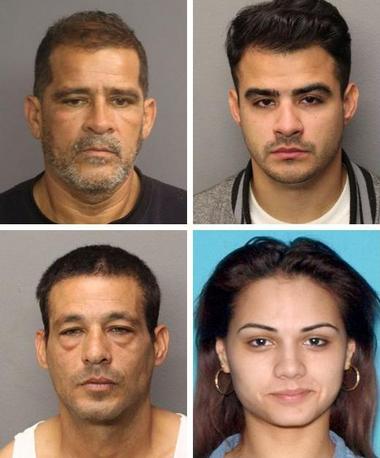
    Charles P. Torres, 59, Charles B. Torres, 26, Victor Reyes, 38, and Patricia Munoz, 23,

    Newark, New Jersey –Four adults, including a father and son team, now face serious prison time after being charged with Conspiracy, Prostitution, Human Trafficking, Sexual Assault on a Child, and Production of Pornography Involving a Child.

    Charles P. Torres, 59, Charles B. Torres, 26, Victor Reyes, 38, and Patricia Munoz, 23, coerced a 15-year-old girl into the world of prostitution, according to the Essex County prosecutor’s office. The 15-year-old was being taken from locations in Belleville and North Bergen to unnamed spots where she was forced to have sex with men, Assistant Prosecutor Kelly Sandler said in a press release. The girl would then turn over the money over to the older Torres.

    Torres repeatedly raped the 15-year-old and would take pictures of her while she was nude, then text them to potential clients.

    Charles Torres was arrested back in August of 2013, but his son, Reyes, and Munoz continued to run the human trafficking/prostitution business and collect the cash while Charles Torres was behind bars.

    An indictment was handed down in coordination with the state Attorney General’s human trafficking task force. The FBI, Belleville Police, and the Hudson County Prosecutor’s Office also took part in the investigation, according to reports.

    All four adults are now facing 20 years to life in Prison if convicted. The state is using a comprehensive anti-trafficking law passed by the Legislature last year to aid in the prosecution.

    “This is a prime example of the law being used to prosecute individuals who are targeting most the vulnerable in our state,” said Kate Keisel, the New Jersey director of the Polaris Project, a Washington, D.C.-based organization that pushes for stronger laws against human trafficking and slavery and advocates on behalf of victims

    Keisel, whose resource center is in Newark, said her office helped about 100 victims of trafficking last year, a number she expects to increase this year.

    What most can’t believe is how women can be involved in aiding in human trafficking, said one police officer.

    Police say the law toughened penalties for those who publish ads for escorts who are minors, increases penalties for trafficking, established a victims’ fund and created a 15-member state commission to look at the issue.

    The investigation is still ongoing.

    Marion teacher Duane Adams hides girl from parents


    duane adams, ocala post, ocala news, Francis Marion Military Academy
    Duane Adams [Mugshot]
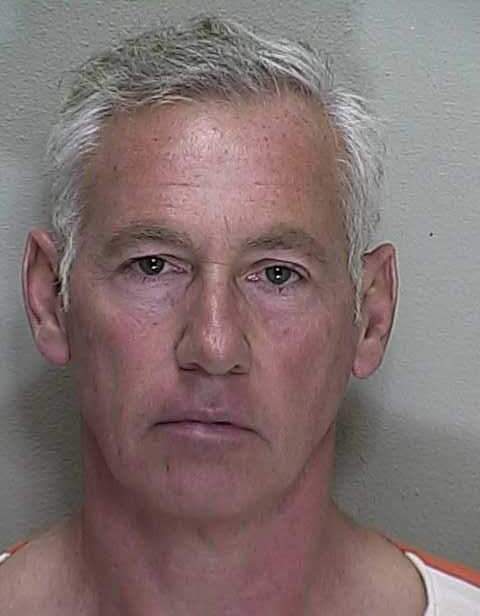
    Ocala, Florida — On Friday, January 10, 2014, the parent of a 15-year-old student of Francis Marion Military Academy reported her daughter as a runaway. Earlier that morning, the mother had found teacher and retired Army Sergeant, Duane Ernest Adams, 54, waiting outside her home for her daughter; he claimed he was there to drive her to school. The mom reportedly asked Adams to leave so she could driver her daughter to school, which she did.

    The child never returned home, and it was later determined that the girl never attended school.

    Throughout the weekend the child’s parents brought forward information on possible people their daughter could be with, and places she might have gone. Officers followed up on each of these tips, but were unable to locate the runaway child.

    Among the people interviewed was the teacher/coach Adams, who denied any knowledge of the child’s whereabouts when questioned by Officer Hoffman on Sunday, January 12, 2014, and again when he spoke to Detective Fernandez and Sergeant Young on Monday, January 13, 2014.

    On Monday, January 13, 2014, the 15-year-old girl was located at the Steak N’ Shake, 3800 SW College Road in Ocala. Officer Jessica Wong responded and made contact with the girl; she was then returned to her parents.

    The girl and her parents met with Detective Fernandez on January 14, 2014, as did Adams. It was learned through the interviews that Adams had taken the girl from school on January 10, 2014, and allowed her to stay in his apartment during school. That evening Adams took the 15-year-old girl to Daytona where they stayed in a hotel for two nights and he used a fake name upon check-in. On Sunday, January 12, 2014, Adams drove the girl to the Ocala RV Campgrounds, 3200 SW 38th Avenue, where he rented a cabin for her for four days.

    Adams finally admitted that he lied to police about the 15-year-old girl’s whereabouts and his involvement.

    Adams denies any sexual contact with the girl.

    Adams was arrested on January 14, 2014 and charged with one felony count of Interference with Child Custody and booked into the Marion County Jail.

    Adams has been suspended without pay.

    Traffic stop yields arrest for laundry detergent box contents


    Lopez Gerardo Antonio, ocala news, ocala post, georgia news, cocaine
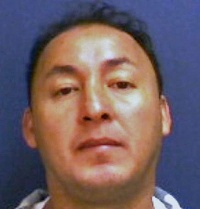
    Lopez Gerardo Antonio

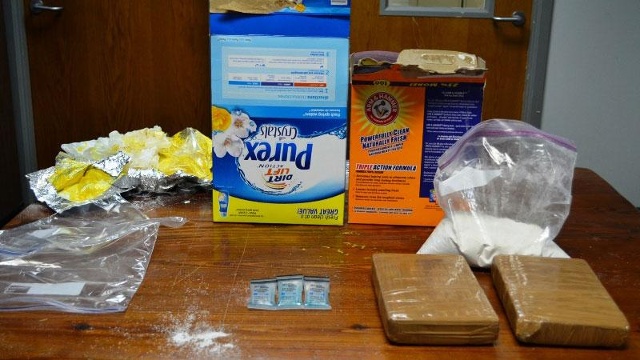
    Woodbine, Georgia — Camden County deputies pulled over a Honduran man five miles north of the Florida-Georgia line on I-95 for failure to maintain his lane and discovered 6.5 pounds of cocaine.

    When deputies approached the vehicle and asked for license and registration, the driver, Gerardo Antonio Lopez, 40, of Miami, produced a Honduran International driver’s license and a rental agreement for the vehicle.

    Lopez told the deputy he and his passenger were coming from Maryland where they were visiting family, but the passenger told the deputy they were coming from Virginia.

    The deputy asked Lopez if it was OK if he performed a search of the vehicle, at which time Lopez granted the deputy permission. The Deputy found two laundry detergent boxes sitting on the rear floor boards in Wal-Mart bags. The deputy then asked Lopez who they belonged to and Lopez said they were his. After noticing that the boxes had been opened and resealed, the deputy asked Lopez if he could open the boxes and Lopez said yes. There were three separate concealed plastic bags in the boxes.

    After careful inspection at the substation, deputies found two zip-lock bags and a hard package that contained a compacted white powdery substance that field-tested positive for cocaine, totaling 6.5 pounds (nearly 3 kilos), and has an estimated street value of $70,000.

    Authorities say Lopez’s sole purpose in the U.S. seems to be strictly for trafficking in Cocaine and may be tied to a larger scale drug operation.

    Lopez claimed ownership of the cocaine and said his passenger did not know anything about it.

    Lopez was charged with Trafficking Cocaine and is being held at the Camden County Jail.

    Ocala woman’s dog gets a mouth full

    0


    Grenade, ocala post, ocala news, op

    Ocala,Florida — On January 14, 2014, at approximately 1 a.m., a call came into the Ocala Police Department about a suspicious object.

    A woman called and said while her dog, Lady, was digging in her backyard she dug up something and had it in her mouth. The dog owner said when she looked closer it looked like a grenade, so she removed it from the dogs mouth, and placed it in the backyard. She says she immediately called police.

    Ocala Police arrived on the scene and quickly made the determination that the Marion County Sheriff’s Office should be notified. MCSO’s Bomb Squad responded to the 600 block of SE 40TH Terrace a short time later.

    According to reports, the object the dog had dug up and carried around it its mouth, was in fact a WWII era live pineapple grenade.

    The bomb squads robot was able to collect the item. The grenade was then taken by bomb squad to the Marion County Baseline Landfill, where they rendered it safe and properly disposed of it without incident.

    Paranoid Man Tapes Bullets To Windows

    1


    Jay McBride, ocala post, ocala news, ocala ,op
    Jay McBride [Mugshot]
    Ocala, Florida — On January 12, 2014 the Marion County Sheriff’s Office responded to the 9000 block of SE 88th Street in reference to a disturbance.

    Upon arrival, Jay C. McBride advised that he and his girlfriend, Gina Celona, were having an argument about her smoking marijuana inside the house, and McBride produced a small tin which contained a very small amount of marijuana to the deputy, according to reports.

    The deputy asked McBride if he could separate from his girlfriend for a little bit in order to diffuse the situation, to which McBride responded, “I am a convicted felon and I cannot leave my home.” The deputy advised that he did not have to leave the home, but he did need to separate himself from his girlfriend. McBride then left for his mother’s house.

    Deputies remained on the scene and questioned Celona about what had happened. Celona informed deputies that McBride is paranoid and placed cameras in all of the windows, and taped bullets to each window as well. According to deputies, there was ammunition taped to each window inside the home as well as some on the outside.

    Deputies then went to question McBride at his moms house about the bullets and cameras. McBride told deputies that he had placed the cameras in the windows because it’s a former drug dealers house. He also said he placed the bullets in the windows to warn off anyone that may come looking to buy drugs.

    Deputies confirmed that McBride was a convicted felon with a long criminal history, including seven felony convictions, one of which was for felony battery.

    McBride was advised he was being placed under arrest for Possession of Ammunition by a Convicted Felon and he began to scream, “I did not tape the bullets on the windows.” McBride was arrested and placed in the back of the patrol car, at which time he became agitated and began striking his head on the glass in the patrol car, and after several strikes with his head he broke the glass, according to reports.

    McBride was transported to the Marion County Jail without further incident. He was charged with Possession of Ammunition by a Convicted Felon and Property Damage Over $200.

    Bail was set at $10,500.

    McBride’s girlfriend was not charged.

    21 Horses Rescued From Near Death On Davie Ranch

    1


    davie florida, ocala post, ocala, ocala news, op
    One of the many starving horses

    Davie, Florida — Twenty-one starving horses were rescued from a ranch in Davie, Florida. The horses were rescued by Peaceful Ridge Rescue Group, and they say unfortunately three of the horses may have to be put down.

    Authorities say the horses were standing in more than two feet of their own feces, and there was not any horse food on the property.

    The horses have been neglected for years, and are extremely “skiddish” around humans, according to reports.

    Police said they could see the ribs, butt bones, and back bones of most of the horses. Some of the horses had lacerations that were oozing blood, and many could not stand because of hoofs being left untrimmed for nearly a year.

    The owner of the ranch refused to comment but told police he could not afford to buy food for the horses. Police say instead of the ranch owner asking for help, the horses were basically left to starve and possibly die.

    Police say criminal charges have not yet been filed against the ranch owner.

    Husband tells wife to refuse sobriety test after hit and run

    1


    ocala news, ocala post, dui, ocala, op
    Lacey Manserra [Mugshot]
    Ocala, FLorida — On January 12, 2014, at approximately 11:30 p.m., Ocala Police Officer, Jason Rodriguez, was working a hit and run crash involving an impaired driver.

    Officer Rodriguez responded to the call and met with a witness that said a dark colored Lexus fled the scene after hitting several mail boxes and a parked car.

    According to reports, Officer Rodriguez located the Lexus in the 4800 block of SW 63RD Loop and made contact with Lacey Manserra,29, who was identified as the driver of the Lexus.

    According to reports, Manserra refused to answer any questions. After inspecting the vehicle, Officer Rodriguez discovered fresh damage consistent with the witness’ account of the accident. Officer Rodriguez read Manserra her Miranda warning at which time Manserra consented to answer questions, but Manserra denied knowing what happened.

    Manserra was slurring her speech and smelled of alcohol, according to reports. Officer Rodriguez asked Manserra if she had been drinking and she said she had stopped drinking around 10:30 p.m., and had not had anything to drink since she arrived home.

    Moments later, Officer Joedicke arrived on the scene to conduct a DUI investigation. Officer Joedicke reported that Manserra was slurring her words, smelled of alcohol, and had glossy eyes.

    Manserra was advised that she would have to perform some field sobriety exercises, and it was at that time Manserra’s Husband yelled across the yard, “don’t do it.” Officer Joedicke explained that if she did not perform the exercises they (the officers) would have to go off their observations of her behavior, smell of alcohol on her, and the physical damage to the car described by witnesses.

    Manserra still refused, she was placed under arrest and transported to the Marion County Jail.

    Photos of the damage to the Lexus were place into evidence.

    Manserra was charged with DUI and Leaving the Scene of an Accident Involving Property Damage.

    No innocent victims were hurt during the hit and run.

    Woman Found Stabbed To Death In Gainesville Hospital Parking Garage

    0


    Casey Renee Wilsey, ocala post, ocala news, ocala, op, gainesville
    Casey Renee Wilsey -Deceased


    ocala post, ocala news, gainesville, op
    Walker Gage Wilsey, 46

    Gainesville, Florida — The Gainesville Police Department is currently investigating a homicide that occurred early Monday morning on the third floor of a Parking Garage at North Florida Regional Medical Center.

    GPD received a call at 8:58 a.m. on January 13, 2014 that reported a female was found dead in a vehicle parked on the third floor of the parking garage near the Women’s Center entrance.

    GPD officers responded and found Casey Renee Wilsey, 37, lying in the vehicle deceased. The preliminary investigation revealed that Casey likely died as a result of a stab wound to her torso.

    GPD investigators received information from family members that the likely suspect is Casey’s estranged husband, Walker Gage Wilsey, 46. Walker is a white male, 6’1” 140lbs.

    Casey Wilsey worked in the NFRMC complex and normally parked in the garage. It appears that Walker waited for Casey to arrive at work, then attacked her in the parking garage while she was still inside of her vehicle. Investigators believe the incident occurred sometime between 8:15 and 8:30 a.m. Walker then fled the area driving a white F-350 diesel pickup truck with a camo-style bottom “wrap.”

    GPD investigators had asked multiple agencies, including Daytona Beach, Florida Police Department to check possible addresses for Walker. When Daytona Beach PD arrived at one of the locations, Walker had already committed suicide around 3:30 p.m.

    Walker was also convicted on two counts of Child Rape in 1988.

    Orlando medical alert company scammed seniors out of millions


    senior scam alert, ocala, ocala news, ocala post, op, orlando

    Orlando, Florida — At the request of the Federal Trade Commission and the Office of the Florida Attorney General, a U.S. district court has temporarily halted and frozen the assets of an Orlando-based operation that used pre-recorded telephone calls, commonly known as ‘robocalls’, to pitch purportedly “free” medical alert devices to senior citizens by false representing that the devices had been purchased for them by a relative or friend. The defendants also allegedly led consumers to believe that the devices were endorsed by various health organizations and that they would not be charged anything before the devices were activated.

    The agencies are seeking a court order permanently banning the defendants from engaging in the allegedly fraudulent and illegal conduct, and providing restitution to consumers who were victimized.

    “We will not tolerate unscrupulous individuals targeting the elderly. This company received more than $13 million in commissions since March 2012, and we will do everything in our power to compensate consumers who lost money due to the fraudulent medical alert scheme,” said Florida Attorney General Pam Bondi. “I thank the Federal Trade Commission for its partnership in this effort, which involved thousands of affected consumers, and the numerous other agencies who joined in the effort to stop these business practices.”

    “These telemarketers used illegal ‘robocalls’ to make a sales pitch that was 100 percent false,” said Jessica Rich, Director of the Federal Trade Commission’s Bureau of Consumer Protection. “They lied about the product, about whether health organizations had endorsed it, and about its cost. And all the while, their M.O. was to take advantage of older people’s concerns about their health. We’re so glad to work with our partners in Florida to stop this fraud.”

    According to the joint agency complaint, the defendants violated the FTC Act, the Commission’s Telemarketing Sales Rule (TSR), and Florida’s Deceptive and Unfair Trade Practices Act (FDUTPA) by blasting ‘robocalls’ to senior citizens falsely stating that they were eligible to receive a free medical alert system that was bought for them by a friend, family member, or acquaintance. Many of the consumers who received the defendants’ calls were elderly, live alone, and have limited or fixed incomes.

    Consumers who pressed one (1) on their phones for more information were transferred to a live representative who allegedly continued the deception by saying that the medical alert systems are recommended by the American Heart Association (AHA), the American Diabetes Association (ADA), and the National Institute on Aging (NIA). In addition, the telemarketers falsely stated that the monthly monitoring fee for the system will be charged only once the medical alert system has been installed and activated. In reality, the defendants started charging consumers who agreed to receive the system immediately, regardless of whether the system had been activated or not.

    Based on this alleged conduct, the joint complaint charges the defendants with misrepresenting a range of facts, including that someone the consumer knows already purchased the system for them, that the defendants’ medical alert system is endorsed by the AHA, ADA, and NIA, and that consumers will not be charged until the system has been activated. The complaint also charges the defendants with violating the TSR by making illegal ‘robocalls’, including to consumers on the National Do Not Call Registry, and by failing to disclose the caller’s telephone number or identity.

    The Commission vote approving the complaint was 4-0. The complaint was filed in the U.S. District Court for the Middle District of Florida, Orlando Division, on January 6, 2014. The following day, the court entered a temporary restraining order that froze the defendants’ assets and appointed a temporary receiver over their business. A preliminary injunction hearing in the case is scheduled for January 16, 2014.

    The defendants include: 1) Worldwide Info Services, Inc., also doing business as (d/b/a) The Credit Voice; 2) Elite Information Solutions Inc., also d/b/a The Credit Voice; 3) Absolute Solutions Group Inc, also d/b/a The Credit Voice; 4) Global Interactive Technologies, Inc., also d/b/a The Credit Voice Inc.; 5) Global Service Providers, Inc.; 6) The Credit Voice, Inc, also d/b/a TCV; 7) Live Agent Response 1 LLC, also d/b/a LAR; 8) Arcagen, Inc., also d/b/a ARI; 9) American Innovative Concepts, Inc.; 10) Unique Information Services Inc.; 11) Michael Hilgar; 12) Gary Martin; and 13) Joseph Settecase.

    The FTC appreciates the assistance of the following agencies, offices, and organizations in helping to investigate and bring this case: 1) the Indiana Office of the Attorney General; 2) the Minnesota Office of the Attorney General; 3) the Florida Department of Agriculture and Consumer Services; 4) the Better Business Bureau Serving Eastern Missouri and Southern Illinois; 5) the American Heart Association; 6) the American Diabetes Association; 7) the National Institute on Aging; 8) the United States Postal Inspection Service, including its Atlanta, Boston, and Houston divisions; and 9) the Seminole County Sheriff’s Office, Financial Crimes Task Force.

    Information for Consumers

    The FTC has tips for consumers, as well as two consumer education videos explaining robocalls and describing what consumers should do when they receive one. See ftc.gov/robocalls for more information. In addition, the FTC has a new consumer blog post on deceptive medical alert robocalls, which can be found on the agency’s website.

    NOTE: The Commission authorizes the filing of a complaint when it has “reason to believe” that the law has been or is being violated, and it appears to the Commission that a proceeding is in the public interest. The complaint is not a finding or ruling that the defendant has actually violated the law. The case will be decided by the court.

    The Federal Trade Commission works for consumers to prevent fraudulent, deceptive, and unfair business practices and to provide information to help spot, stop, and avoid them. To file a complaint in English or Spanish, visit the FTC’s online Complaint Assistant or call 1-877-FTC-HELP (1-877-382-4357). The FTC enters complaints into Consumer Sentinel, a secure, online database available to more than 2,000 civil and criminal law enforcement agencies in the U.S. and abroad. The FTC’s website provides free information on a variety of consumer topics.

    Accused Killer Richard Barnes Captured

    1


    Cynthia McGee Bryant
    Cynthia McGee Bryant

    richard barnes, mcgee bryant, ocala news, ocala post, op
    Richard Barnes [Mugshot]
    Sanford, Florida — Wanted suspected murderer Richard Barnes has been arrested for the shooting death of Cynthia McGee Bryant.

    On January 6, 2014 shortly after noon, Sanford Police were dispatched to McGee Insurance Company located at 400 West 25th Street, Sanford, Florida in reference to a Homicide.

    When police arrived on the scene they found McGee slumped over in her chair with a broken cell phone still in her hand.

    Investigators along with the medical examiners office were able to determine that McGee had been shot four times. The fatal shot was to the chest with three other shots to her body.

    Barnes was taken into custody shortly after 4 p.m. on January 8, 2014.

    Witnesses were able to identify Barnes in a line up. Barnes has multiple felony convictions and has been arrested multiple times on charges ranging from Cocaine Distribution to Obstruction of Justice.

    Barnes denies that he is the person that shot McGee.

    Barnes is charged with Premeditated First Degree Murder.

    Deltona Firefighter Faces Additional Charges For Rape

    0


    Firefighter Terry Freeman, ocala post, ocala news, op, deltona
    Firefighter Terry Freeman [Mugshot]
    Deltona, Florida — Already in jail on accusations of date rape, a 32-year-old Deltona firefighter is now facing additional charges after three more women came forward following news coverage of Terry Freeman’s arrest to report that Freeman had done the same thing to them. In addition, an investigation into a sexual assault allegation against Freeman from 2011 has been re-opened, and Volusia County Sheriff’s investigators are concerned that there may be additional victims who haven’t yet come forward.

    Freeman was initially arrested on December 31, 2013, less than a week after a 25-year-old Altamonte Springs woman accused him of sexually assaulting her during a date. The two had met at the victim’s workplace in Altamonte Springs on December 27, 2013, and Freeman convinced her to go out with him later that night. The two met at a café for drinks and then went to Freeman’s home near Orange City. When things turned romantic, the victim said she told Freeman that she didn’t want to have sex. The victim said Freeman became increasingly aggressive and eventually overpowered her and had sex with her against her will. After the attack, the victim went home to Altamonte Springs and reported the incident to the police there.

    The Volusia County Sheriff’s Office was brought in when it was determined that the incident had occurred near Orange City. On December 31, 2013 Sheriff’s investigators took Freeman into custody after obtaining an arrest warrant charging him with sexual battery.

    Since word of Freeman’s arrest was reported in the news, three more victim have come forward with similar stories of meeting Freeman for a date and then being sexually assaulted by force. On Thursday, Sheriff’s investigators filed charges on two of those cases. The third is still under investigation. One case involves a 39-year-old Orange City woman who also reported meeting Freeman at her workplace. The victim said Freeman had asked her out on a date before, but she initially declined because she was already in a relationship. However, after the relationship ended, the woman said she agreed to go out with Freeman last month. The two ended up at Freeman’s house, but not before the victim said she sent Freeman a text message letting him know that she wasn’t interested in a casual sexual encounter. Initially, things got flirtatious. But then, the victim said Freeman became aggressive and he eventually pushed himself on her and forced her to have sex. The victim said she tried to resist, but eventually gave up for fear that Freeman might hurt her. “You hear stories where women have fought back and were beaten or killed,” the victim told investigators. “You hear stories where women who don’t fight back are able to walk away. I just wanted to walk away safely.”

    On Thursday, the victim said she decided to come forward after seeing news coverage of Freeman’s arrest. Based on the results of the investigation, the Sheriff’s Office obtained an arrest warrant on Thursday charging Freeman with sexual battery. He was served with the warrant at the Volusia County Branch Jail in Daytona Beach just before he was about to be released on the previous charge. He’s now being held at the jail without bond.

    Sheriff’s investigators also charged Freeman on Thursday with sexual battery in connection to another case, this one dating back to 2011. The victim, a 38-year-old Lake Mary woman, contacted the Sheriff’s Office earlier this week after hearing about Freeman’s arrest and reported that she had been sexually assaulted by Freeman and had never reported it to law enforcement until now. She said she met Freeman at a club in Sanford where she worked. After they had been texting back and forth for a while, Freeman invited the woman to his home. She said that when she got there, Freeman offered her a glass of wine and then almost immediately forced himself on her, overpowered her, stripped off her clothes and sexually assaulted her.

    The Sheriff’s Office is investigating another incident recently reported by a victim who also came forward after hearing of Freeman’s arrest. Meanwhile, back in 2011, while Freeman was living in the city limits of Orange City, an 18-year-old woman filed a complaint with the Orange City Police Department accusing Freeman of sexually assaulting her. The case was closed after the woman recanted. However, in light of the new allegations against Freeman, the Orange City Police Department re-opened its investigation and has filed charges with the State Attorney’s Office and is seeking the issuance of an arrest warrant.

    Often women that have been victims of an sexual assault will not come forward. Reasons can be: The woman was abused as a child, therefore she may feel the abuse is acceptable, the woman is afraid of retaliation, or she is embarrassed.

    If you were sexually assaulted you are urged to come forward.

    Sheriff’s investigators worry that there could be additional incidents with Freeman that have gone unreported and additional victims who haven’t come forward. If there are other victims or anyone with additional information regarding Freeman, they’re urged to contact the Sheriff’s Office at (386) 860-7030.

    Mosquito-borne Illness Advisory Lifted


    Places Mosquitoes Breed - Ocala Post
    Places Mosquitoes Breed [ventura.org]
    Ocala, Florida—The Florida Department of Health in Marion County has lifted the mosquito-borne illness advisory that was established in July 2013. Officials say, even though the advisory has been lifted you should still take precautions when outdoors. Residence should also continue to be proactive in eliminating standing water as well as moist areas where mosquitoes can breed.

    Marion County issued a mosquito-borne illness advisory in July after horses in the Micanopy area of northwestern Marion County tested positive for the eastern equine encephalitis virus.

    With the decrease in mosquito-borne illnesses across the state and the recent lower temperatures, we are confident that it is safe to lift the advisory,” said Dan Dooley, Environmental Health administrator at the Florida Department of Health in Marion County. “However, we want our residents to continue to take precautions so they can avoid these serious illnesses.”

    Mosquito-borne infections can occur at any time in Florida. The Department encourages everyone to take basic precautions to help limit exposure to mosquitoes. The Department is also recommending that horse and livestock owners contact their veterinarian about vaccinations against mosquito-borne diseases.

    New Senate Bill Will Reduce Vehicle Registration Fees

    0


    senator Don Gaetz, ocala post, op, ocala news, tallahassee

    Tallahassee–The Florida Senate Subcommittee on Transportation, Tourism and Economic Development Appropriations, chaired by Senator Andy Gardiner (R-Orlando), today unanimously passed Senate Bill 156, Motor Vehicle License Taxes, sponsored by Senate Appropriations Chair, Senator Joe Negron (R-Stuart).

    This legislation provides a recurring reduction in fees paid annually by every Floridian who registers a car,” said Senator Negron. “As our economy continues to recover, exploring ways for government to take less money from the pockets of hardworking Florida families is the right thing to do and I appreciate my colleagues supporting this legislation over the last two years.”

    Senate Bill 156 reduces certain annual fees paid to register a motor vehicle to the amount paid prior to 2009. In total, the bill reduces fees by over $236 million.

    “I commend Senator Negron for championing this necessary and welcome reduction in vehicle fees for the second time in two years,” said Senate President Don Gaetz (R-Niceville). “As we did last year, the Senate stands with Senator Negron in advocating for tax and fee reductions that will leave more money with the Floridians who earn it.”

    “The Senate, House and Governor’s Office have outlined tax and fee reductions as a top priority for the 2014 Session, and I am grateful to Senator Negron for taking the first step by sponsoring this fee reduction again this year,” said Senator Gardiner. “I look forward to working with my colleagues in the Legislature and with Governor Scott as this bill and other tax and fee reduction proposals move through the process. I am confident our final package will provide meaningful tax relief for Florida families.”

    Senate Bill 156 was previously passed by the Senate Committee on Transportation. The legislation will now be heard in the Senate Committee on Appropriations, its final committee stop prior to the Senate Floor.

    Mother whose baby was rolled over on and died arrested; grandmother blames probation officers


    Jaclyn Ericson, ocala news, ocala post, op,
    Jaclyn Ericson [Mugshot]
    Ocala, Florida — On January 6, 2014, deputies were dispatched to the 10800 block of Southeast 45th Avenue in Belleview at 6:35 a.m.

    Upon arrival, Deputy Jeremiah Jones spoke with a man who claimed that his daughter had fallen asleep an rolled over on his girlfriends 5-week-old baby, Keegan Alexander Ericson.

    Ericson told investigators that she found Keegan under the girl and that Keegan had been smashed in between the couch cushions.

    Paramedics arrived on the scene and pronounced Keegan dead at approximately 6:46 a.m.

    Jaclyn Corin Ericson, 20, was arrested January 8, 2014, but not for the baby’s death.

    According to reports, Ericson was on felony probation for armed robbery that she committed in January of 2012. Then in December of 2012 Ericson violated her felony probation and was arrested and charged with another robbery as well as battery. Her felony probation was not set to terminate until March of 2015.

    During the visit to her home on January 6, 2014, alcohol was seen in her residence. In accordance with her probation, Ericson is not allowed to be in possession of weapons, ammunition, drugs or alcohol.

    Ericson’s probation officer arrested her not just for the alcohol that was found out in the open at her residence, but also because she tested positive for cocaine at the time of 5-week-old Keegan’s death. Authorities said the cocaine was in her blood stream while she was caring for her child.

    Joann Ericson, Jaclyn Ericson’s mom, is placing blame on the probation system and wants the probation system to be held accountable. Joann says if the probation officer had arrested her daughter the first three times she failed a drug test, the baby would still be alive.

    Ocala Post spoke with Department of Corrections Deputy Communications Director Misty Cash, and she said, “The offender was not a drug offender and was given random drug tests which complied with her supervision. Those tests, each time they were given, were negative. Those tests were given three times.” Cash went on to say,”Our officers ensure the offender abides by the stipulations of the Court and of course require offenders to abide by Florida law. We have to be sure that any violation is willful and substantial, and would be something that the officer could have held up in court.”

    Captain James Pogue, with the Marion County Sheriff’s Office told Ocala Post that 5-week-old Keegan’s death is still under investigation and investigators are looking into criminal charges against Ericson.

    Ericson admitted drinking Jägermeister and Corona beer.

    Ericson is being held at the Marion County Jail; bail has not been set.

    [Updated January 11, 2014 at 5:06 a.m.]

    India says Diplomat Devyani Khobragade should not answer for laws broken in the U.S.


    Devyani Khobragede, ocala news, ocala post, new york, op, muslims,
    Devyani Khobragede

    New York — An Indian diplomat by the name of Devyani Khobragade, who has caused tension between the U.S. and India was denied a request by a U.S. judge to delay her case.

    Khobragade, who was Deputy Consul-General in New York, was arrested on December 12, 2013, and charged with committing visa fraud by filing false documents to obtain a work visa. She is also charged with defrauding the IRS by paying her full time maid slave wages, and then lying about it. Khobragade had filed documents claiming she was paying her maid $4,500 a month, when she was actually paying her $573 a month.

    Her arrest has infuriated India as a whole, and the government in India says all charges should be dropped. India officials do not feel as though Khobragade should be held accountable for laws broken in the United States, they are now requesting Khobragade be moved to the United Nations and want her to be given diplomatic immunity.

    The India government says Khobragade should have never been strip searched by another female and placed in a jail with the general population, which they referred to as United States scum. India has made reference to retaliation against the U.S.

    In an order issued on Wednesday, U.S. Magistrate Judge, Sarah Netburn, in Manhattan, refused to extend the January 13, 2014, deadline by which a preliminary hearing must be held or an indictment filed in the case.

    Khobragade’s attorney, Daniel Arshack, told the judge that not delaying her case would be interfering with negotiations with the government. Judge Netburn told Arshack he had only wanted to delay the case in an attempt to delay the indictment.

    Arshack says he will explore “other options.”

    After Khobragade was arrested she was released on $250,000 bail.

    Kendra Vandyke Arrested For Splitting Knee With Pot


    kendra vandyke, ocala news, ocala post, op, banner
    Kendra Vandyke [Mugshot]
    Ocala, Florida — On January 7, 2014 Officer Friedman responded to the 2600 block of NW 1st Avenue in response to a domestic battery that had occurred the day before.

    Officer Friedman spoke with a man that said on January 6, 2014 he went to the house of Kendra L. Vandyke,31, to have sex with her; Vandyke is the mother of one of the man’s children.

    The man stated while he was at Vandyke’s house one of his other children’s mother arrived and an argument ensued between Vandyke and the mother.

    According to reports, Vandyke took the man’s clothes and car keys and ran outside, leaving him in the house naked. The man said Vandyke came back into the house shortly after but refused to return his clothes.

    The man stated that Vandyke grabbed a two steel pots from the kitchen and threw them one at a time. One of the pots struck the man in the knee, splitting it open. As he stood there bleeding, Vandyke still refused to return his clothes. The man drove himself to the hospital after Vandyke gave him his clothes back. He received 10 staples to close the laceration.

    Reports show that the man did not report the incident right away because Vandyke was holding several sets of car keys belonging to customers of his automotive business for ransom. The man said once he was able to retrieve the keys, he immediately called police.

    Vandyke admitted to throwing the pots, but denies that they hit the man.

    Vandyke tried to have the man arrested by claiming he punched her in the head, and she was having her friends harass and threaten the man. Vandyke did have a knot on her head. Police investigated and were able to determine that the knot was actually a cyst that Vandyke has had for years, and not a knot.

    Vandyke has had multiple arrests for battery, and injunctions for violence filed against her from other relationships, however many were thrown out for lack of evidence and or witness testimony.

    It is unclear if the children were home at the time of the incident.

    Kendra Vandyke was arrested and transported to the Marion County Jail.

    She was charged with Felony Domestic Aggravated Battery.